
Menu
×
   ❮     
HTML CSS JAVASCRIPT SQL PYTHON JAVA PHP HOW TO W3.CSS C C++ C# BOOTSTRAP REACT MYSQL JQUERY EXCEL XML DJANGO NUMPY PANDAS NODEJS DSA TYPESCRIPT ANGULAR ANGULARJS GIT POSTGRESQL MONGODB ASP AI R GO KOTLIN SWIFT SASS VUE GEN AI SCIPY AWS CYBERSECURITY DATA SCIENCE INTRO TO PROGRAMMING INTRO TO HTML & CSS BASH RUST TOOLS

MySQL Tutorial

MySQL HOME MySQL Intro MySQL RDBMS

MySQL SQL

MySQL SQL MySQL SELECT MySQL SELECT DISTINCT MySQL WHERE MySQL ORDER BY MySQL AND MySQL OR MySQL NOT MySQL INSERT INTO MySQL NULL Values MySQL UPDATE MySQL DELETE MySQL LIMIT MySQL Aggregate Functions MySQL MIN() MySQL MAX() MySQL COUNT() MySQL SUM() MySQL AVG() MySQL LIKE MySQL Wildcards MySQL IN MySQL BETWEEN MySQL Aliases MySQL Joins MySQL INNER JOIN MySQL LEFT JOIN MySQL RIGHT JOIN MySQL CROSS JOIN MySQL Self Join MySQL UNION MySQL UNION ALL MySQL GROUP BY MySQL HAVING MySQL EXISTS MySQL ANY MySQL ALL MySQL INSERT SELECT MySQL CASE MySQL Null Functions MySQL Stored Procedures MySQL Comments MySQL Operators

MySQL Database

MySQL Create DB MySQL Drop DB MySQL Create Table MySQL Drop Table MySQL Alter Table MySQL Constraints MySQL Not Null MySQL Unique MySQL Primary Key MySQL Foreign Key MySQL Check MySQL Default MySQL Create Index MySQL Auto Increment MySQL Dates MySQL Views

MySQL References

MySQL Data Types MySQL Functions

MySQL Examples

MySQL Examples MySQL Editor MySQL Quiz MySQL Exercises MySQL Syllabus MySQL Study Plan MySQL Certificate


MySQL INNER JOIN


MySQL INNER JOIN

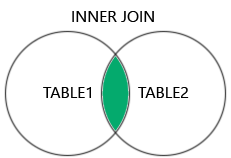
The INNER JOIN clause returns only rows that have matching values in both tables.
MySQL INNER JOIN

INNER JOIN Syntax

SELECT table1.column1, table1.column2, ..., table2.column1, ...
FROM table1
INNER JOIN table2
ON table1.condition_column = table2.condition_column;

Note: The syntax combines two tables based on a related column, and the ON keyword is used to specify the matching condition.


MySQL INNER JOIN Example

Look at a product in the "Products" table:

ProductID ProductName CategoryID Price
3 Aniseed Syrup 2 10.00

And look at a row in the "Categories" table:

CategoryID CategoryName Description
2 Condiments Sweet and savory sauces, relishes, spreads, and seasonings

Here we see that the related column between the two tables above, is the "CategoryID" column.

Now we create an INNER JOIN on the "Products" table and the "Categories" table, via the CategoryID field:

Example

SELECT Products.ProductID, Products.ProductName, Categories.CategoryName
FROM Products
INNER JOIN Categories ON Products.CategoryID = Categories.CategoryID;
Try it Yourself »

Note: INNER JOIN returns only rows with a match in both tables. This means that if there is a product with no CategoryID, or with a CategoryID not present in the "Categories" table, that row will not be returned in the result.


JOIN Multiple Tables

You can join more than two tables by adding multiple INNER JOIN clauses in your query.

The following SQL selects all orders with customer and shipper information:

Example

SELECT Orders.OrderID, Customers.CustomerName, Shippers.ShipperName
FROM Orders
INNER JOIN Customers ON Orders.CustomerID = Customers.CustomerID
INNER JOIN Shippers ON Orders.ShipperID = Shippers.ShipperID;
Try it Yourself »



×

Contact Sales

If you want to use W3Schools services as an educational institution, team or enterprise, send us an e-mail:
sales@w3schools.com

Report Error

If you want to report an error, or if you want to make a suggestion, send us an e-mail:
help@w3schools.com

W3Schools is optimized for learning and training. Examples might be simplified to improve reading and learning. Tutorials, references, and examples are constantly reviewed to avoid errors, but we cannot warrant full correctness of all content. While using W3Schools, you agree to have read and accepted our terms of use, cookies and privacy policy.

Copyright 1999-2026 by Refsnes Data. All Rights Reserved. W3Schools is Powered by W3.CSS.

-->